
Sub-Total: $0.00
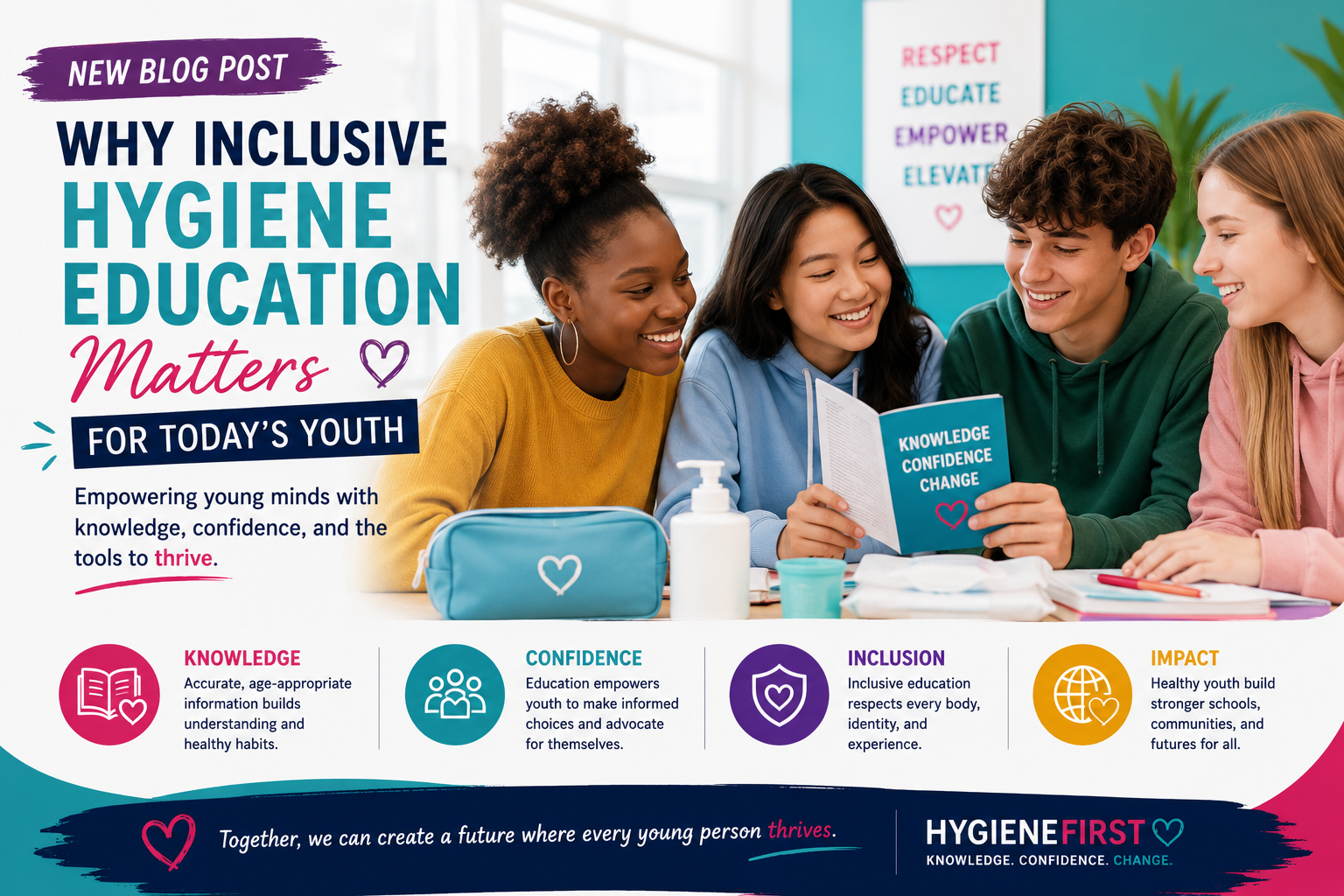
Why Inclusive Hygiene Education Matters for Today’s Youth
Creating Safe Spaces for Confidence, Health, and Self-Advocacy
For many young people, conversations about hygiene, puberty, menstrual health, and self-care can feel uncomfortable, confusing, or even shameful. Unfortunately, many students still grow up without access to accurate, age-appropriate, and inclusive hygiene education.
At Hygiene First, we believe every young person deserves access to information that helps them feel confident, prepared, and empowered to care for themselves.
Inclusive hygiene education goes beyond simply teaching students how to wash their hands or use hygiene products. It creates safe spaces where youth can learn about their bodies, ask honest questions, build healthy habits, and develop the confidence to advocate for themselves.
Why Inclusive Hygiene Education Is Important
Many students experience barriers to hygiene education because of stigma, lack of resources, cultural taboos, or limited access to supportive conversations. These barriers can affect:
- Self-esteem
- Attendance in school
- Mental wellness
- Physical health
- Academic performance
- Social confidence
When students are equipped with knowledge and practical tools, they are more likely to feel prepared, engaged, and confident in their daily lives.
The Impact on Schools and Communities
Research shows that students who have access to hygiene education and menstrual health resources experience improved school participation, increased confidence, and better overall wellness.
Schools and community organizations play an important role in creating supportive environments where students feel seen, respected, and informed.
At Hygiene First, our workshops are designed to:
- Encourage open and respectful conversations
- Promote healthy habits and self-care
- Build leadership and self-advocacy skills
- Reduce stigma surrounding menstrual health
- Empower students to support one another
Moving Forward Together
Creating healthier communities begins with education, compassion, and access.
When we invest in inclusive hygiene education, we are investing in the confidence, dignity, and future of young people.
References
- UNICEF. “Menstrual Hygiene Management.” https://www.unicef.org/wash/menstrual-hygiene
- Centers for Disease Control and Prevention (CDC). “Adolescent and School Health.” https://www.cdc.gov/healthyyouth
- UNESCO. “Puberty Education & Menstrual Hygiene Management.” https://unesdoc.unesco.org